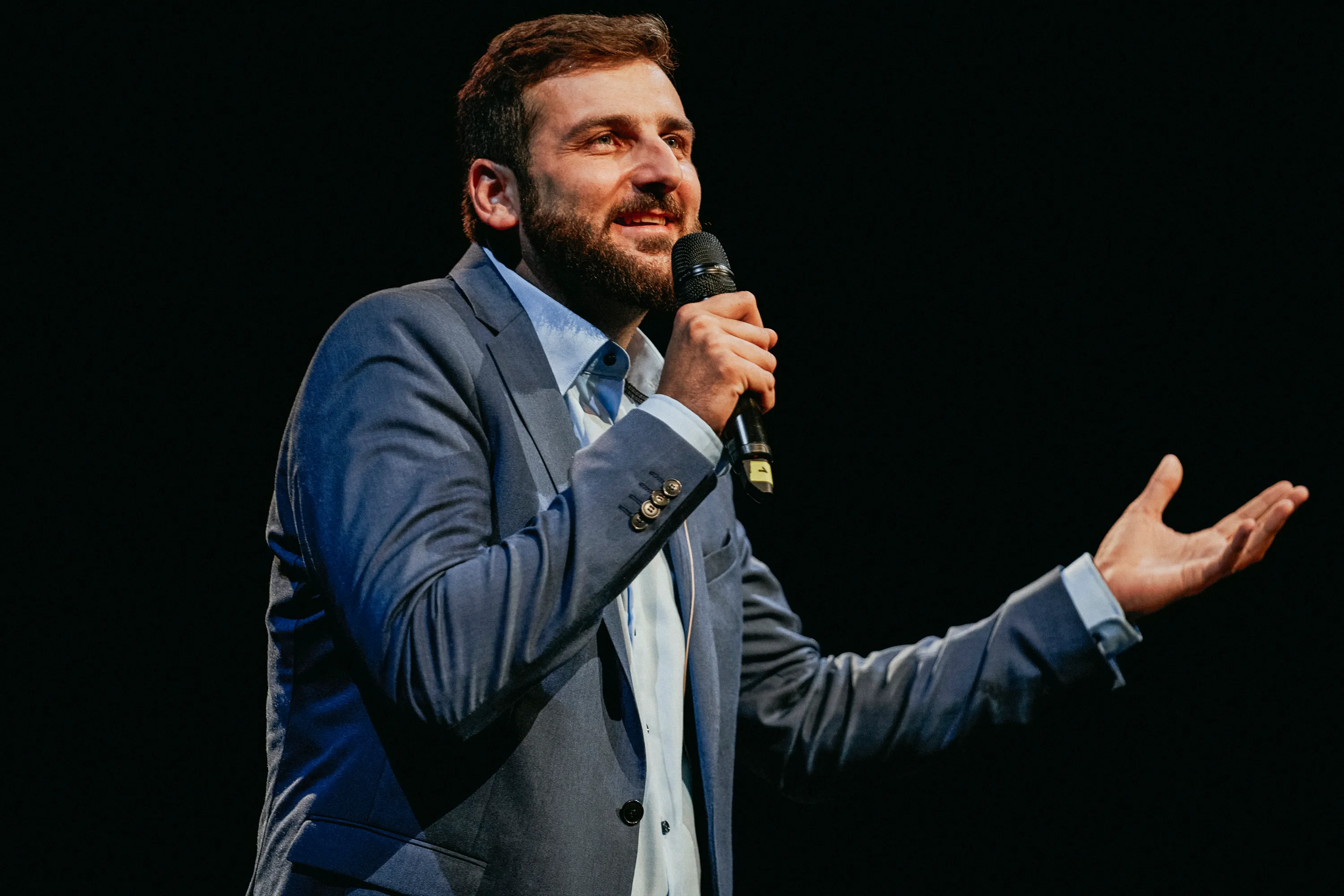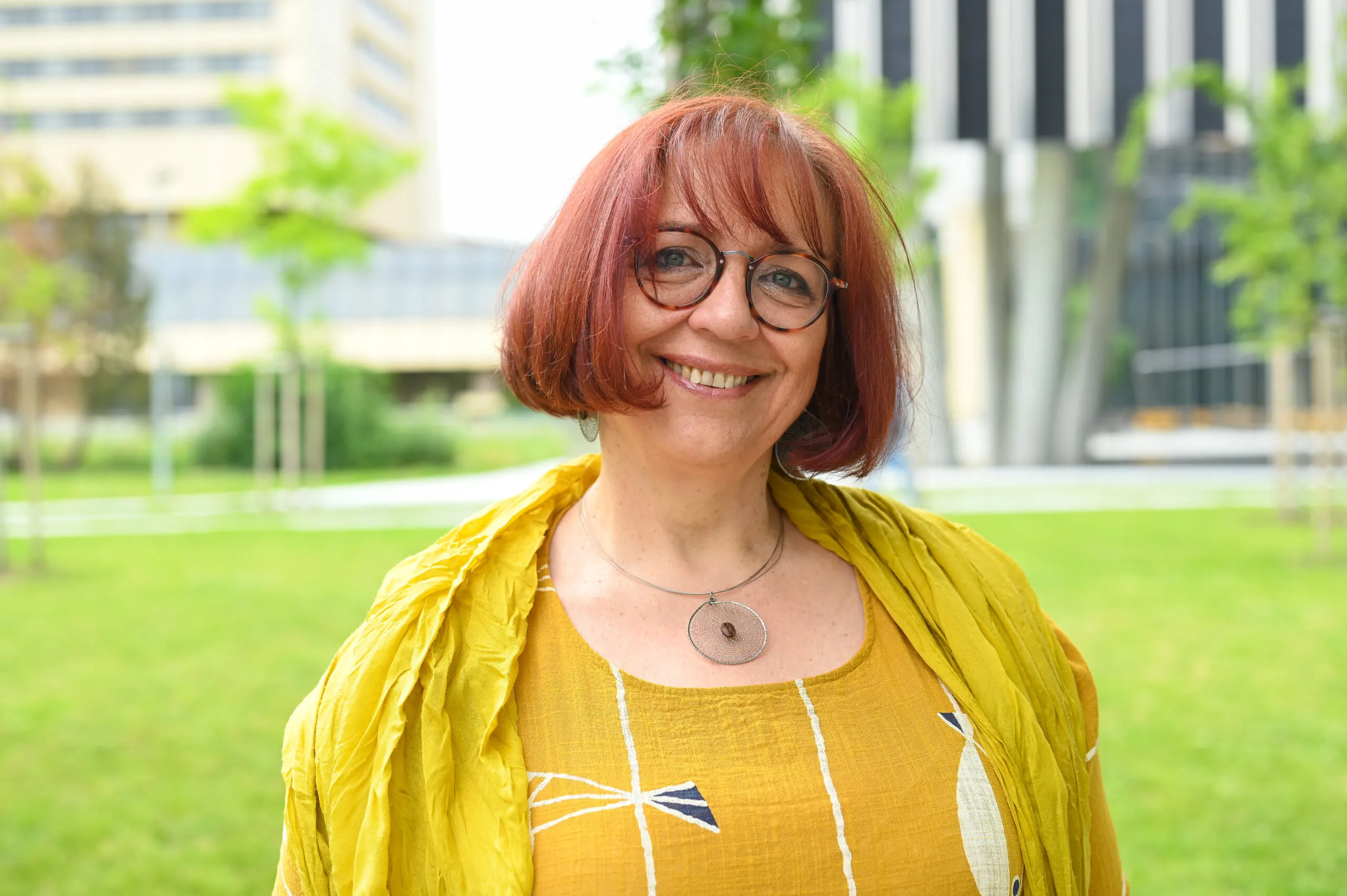
“Office chair manufacturers have been arguing for decades that there is a healthy chair and healthy seating. It simply does not exist,” says Ing. arch. Šárka Daňková, architect, certified specialist in ergonomics, owner ERGO Working Space s.r.o., member of the Czech Council for Sustainable Buildings and founder of the consulting and implementation association of experts in ergonomics of the working environment PROERGO.
You've literally had health problems at work. What was your current job like?
As an architect, I have done projects very successfully. Clients were looking for me. I loved my job. And while working on projects, she sat and sat and sat. When I was studying, it was still standing at the board. That was much healthier. Today, all architects are sitting at the computer and clicking.
Although I have played sports and exercise all my life in my spare time, four years ago my health problems associated with a sedentary lifestyle culminated. Respectively with sedentary work. The doctors told me that lumbar spine surgery was necessary — now. However, the neurologist suggested another option — conservative treatment at the Kladruby Rehabilitation Institute. I agreed.
At the reception they told me that I would stay in Kladruby for at least three months. I was actually there for five months, on incapacity for 13 months.
What led you to specialize in ergonomics? Was it just your health problems or did you become interested in this topic before?
In my office interior projects, I partly dealt with ergonomics. But it was only in Kladruby that I began to look for detailed information about ergonomics and read scientific studies from abroad.
I had a lot of time to study in the hospital. Based on this, I came up with a concept that I am currently working on within Ergo Working Space — the interconnection of three professions: architecture — ergonomics — physiotherapy.
Thanks to the new information about ergonomics, I changed my work habits and managed to stave off surgery. Therefore, our project is focused not only on prevention, but also on solving problems that have already arisen.
What is Ergonomics? What do you actually imagine under this term?
Ergonomics means preparing the work environment for the physical parameters of a person. It doesn't matter if it's a lumberjack, a person in manufacturing or a person in an office. Everyone needs to adapt their work environment and work aids to perform the job.
Ergonomics as a scientific discipline has been around for a long time in the Czech Republic. There are leading gurus of Czech ergonomics such as RNDr. Stanislav Malý, Ph.D. DBA, Prof. Ing. Lubor Chundela, DrSc. or MUDr. Sylva Gilbert. They focus on ergonomics mostly from a scientific and theoretical point of view. They teach, they publish.
At Ergo Working Space, together with our colleague Tereza Naplavová, physiotherapist, we focus on the practical side. We bring movement into the working day in the office. Our concept is called ACTIVE WORKPLACE.
Within PROERGO, we deal with office ergonomics in depth. I bring together experts in smart lighting (because the intensity and color spectrum of light greatly affects our circadian rhythms and our performance), acoustics (since increased noise in the office causes us fatigue, headaches and, as a result, psychological problems), air conditioning (to have clean air in the office), photocatalytic coatings for the ceiling and bionic floors that bind bacteria and viruses. In collaboration with these experts, I design and create slightly healthier offices and office environments.

Is there a growing interest in ergonomically equipped offices?
Interest in ergonomics has been slowly increasing in companies lately. Expert awareness just a little bit. I try to educate people in ergonomics through EWS seminars, workshops and social networks. On LinkedIn, I have a post row under the hashtag #ergomyty. What you learn on the websites of some retailers are mostly marketing phrases and silliness. The word ergonomic has recently become a winged term for office equipment retailers.
What I am noticing is a trend where people are trying to buy ergonomic equipment to offices themselves, without understanding it. Then they come back to me as clients. They bought ergonomic equipment for the company, but it does not suit them or they cannot adjust it and therefore does not work as it should. And they want help from me in retrospect. I appreciate clients like that too. At any time there is room for improvement.
The word ergonomic has become a winged term for sellers of office equipment.
What is the biggest and most common problem of current non-ergonomically equipped offices?
It usually strikes everyone right away — people sitting in inappropriate chairs. Or, in an inappropriate way, on a suitable chair. That's wrong too. Just as there is no healthy chair, there is no healthy sitting. For example, programmers who sit for days on the self-better ergonomic chairs are hit with a huge static load. Often they are either hunched over on a laptop or leaning back. This puts a great strain on their lumbar spine. In this sitting, the pressure on the lumbar discs increases. Professional studies indicate up to one hundred and forty kilograms.
Another problem is that people buy the wrong chairs that do not suit their type of figure. They shop to make it as cheap as possible or get inspired by what suits a colleague. My clients include both women 155 centimeters tall and men with a height of more than 2 meters. It is clear that the same equipment will not suit them.
However, the basic mistake is sitting all day. According to research, we sit fourteen hours a day. We advise people to get up from the computer often. So that they have a reason. It is recommended to go often to replenish a small glass with a drink or go to the toilet to another floor, if possible in the company building.
For your health, you can also limit your car travel and get out of public transport a stop earlier. After twenty to thirty minutes of sitting, we recommend getting up and taking an activation break. This is not exercise, but gentle movement of the body and jump-starting the metabolism. In short, interrupt the session. I had the opportunity to contribute to an article for Respekt magazine titled SITTING: A SURVIVAL GUIDE.
If the employer does not want to invest in ergonomic office equipment, how can we customize the workplace with our own help?
In case of major health problems caused by sedentary work, when you experience headache, trapezius or hand pain, it is desirable to acquire a vertical mouse. This varies in the range of 500 — 1,500 CZK. In addition, you can purchase an ergonomic keyboard that will ensure a healthy adjustment of the hands when typing.
Sometimes activation in the workplace is also sufficient. Three activation breaks during working hours of four minutes are enough.
On this topic, my colleague Teresa and I made a series of videos for our ERGO ACADEMY. In each part of ERGO ACADEMY we focus on a different part of the body. In the individual parts, we also add information about workplace ergonomics.
Recently, Tereza and I completed a diagnostic project in Metrostav Slovakia under the patronage of the Chairman of the Czech Ergonomic Society and we have excellent results from it. We will publish our findings in the near future on our platforms and in other media. In any case, research clearly shows that our bodies respond well to changing work habits even when we make a 50 percent effort to adhere to them. That's why even a little effort counts.
Why is prolonged sitting bad? What happens to our body when we sit for a long time?
I want people to realize that they don't just have to have musculoskeletal pain from sitting. There are far worse consequences. Normal processes in our body do not work, lymph does not flow to us, metabolism stops. After half an hour of sitting, our metabolism slows down by up to 94%. This is proof that our body is not ready for life without movement. When we sit, we basically hibernate. The body is attenuated, functions are attenuated. Already after two minutes of movement, our metabolism returns to its original value. Based on this, it can be seen that the body really needs movement.
An ergonomically equipped workplace is not enough on its own. The body needs movement.
How should the workplace be ideally lit?
The moment older types of fluorescent lamps flash above us, it has devastating effects on us. The so-called flicker effect disrupts our attention, causes fatigue and headache. For the employer, the investment in suitable lighting pays off. Flashlights are an additional resource if I'm working with printed documents. With a PC, this is not so much needed. The workplace must not be over-lit or under-lit. The ideal light is one that maintains the standard level of illumination of the work surface according to the current light intensity in the room and at the same time changes the color spectrum of the light and thus simulates sunshine.
There is a hygienic standard for light in the office, so we suggest the number of fixtures in the space using the calculation. It's easier in the home office. In our work corner, a suitable stand light or a pendant light above the table is sufficient.
A lot of people try to heal their workplace with a stool under their feet or a gymnastic ball for a session. Are these suitable accessories for the office?
In 2010, the enthusiasm for sitting on balls was already cooling in Germany. It turns out that we can withstand active sitting on the ball for fifteen to twenty minutes. Then we loosen up and collapse into the wrong sitting. The ball is a balance surface, we are constantly strengthening on it. If we are in an inappropriate position, we reinforce unhealthy movement patterns and distort the posture of the body.
Balance chairs and balls yes, but fifteen to twenty minutes three times a day maximum. Then choose balance chairs that have the ability to turn off the balance mechanism.
A raised foot mat does not make sense, but a balance mat is suitable. The lymphatic pump is the calves. When we sit or lie down and the calves do not work, the lymph does not work either. This is helped by a balance pad. Underlaying the legs, which is fixed, is useless. We also recommend the Gymba balance mat for active standing. It maintains our correct posture and strengthens the outside center of the body.
If I want to completely ergonomically equip my home office, what financial amount should I prepare?
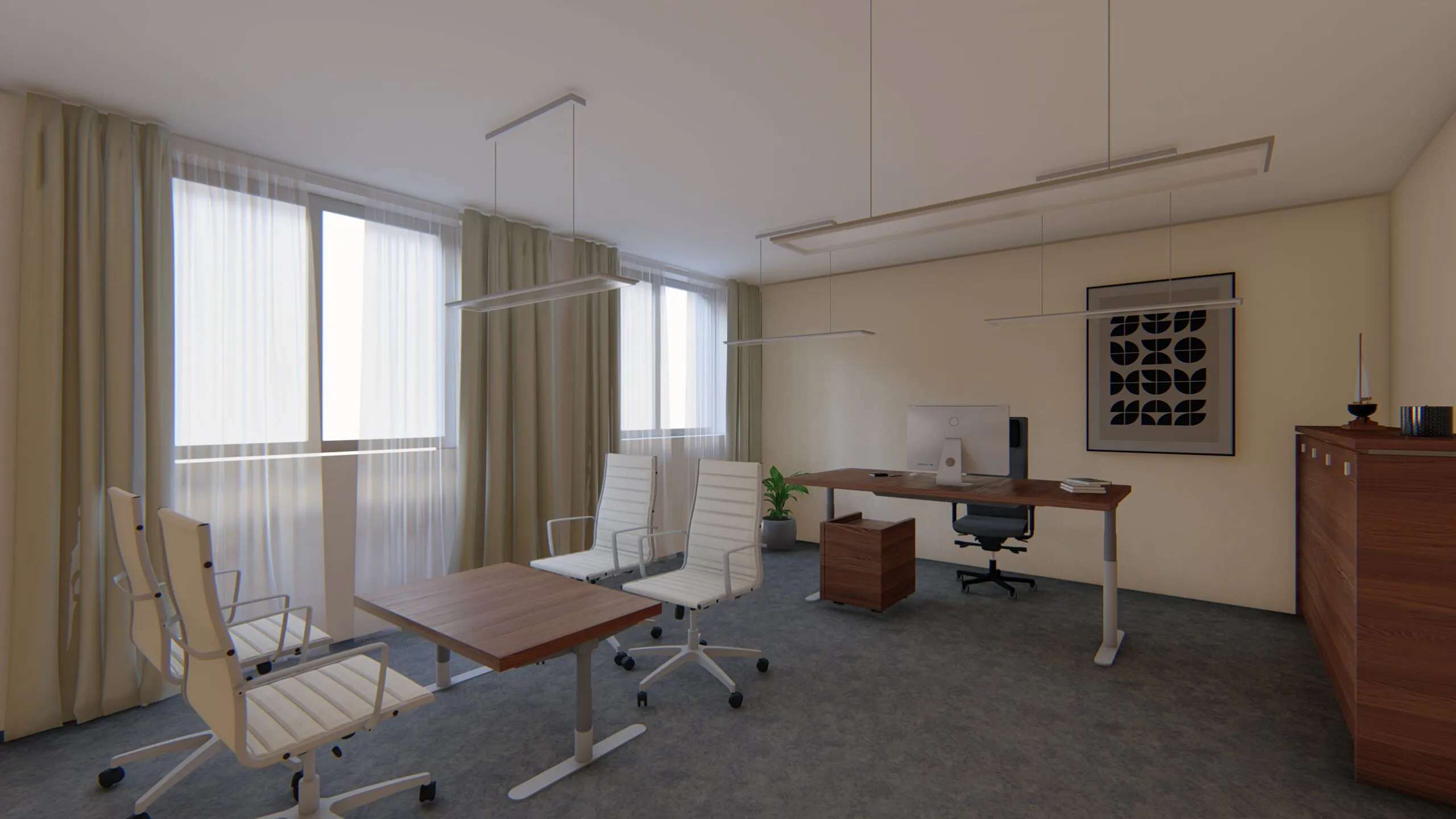
The basic workplace, which is a height-adjustable desk and a basic chair with ergonomic elements, is available for just CZK 14,000 excluding VAT. If you add a monitor holder, vertical mouse, ergo keyboard and Gymba balance pad, a fully ergonomic workstation will cost around CZK 23,000 excluding VAT. And in the price there is also a professional ergonomic adjustment. So it is not something inaccessible. Investing in our health pays off.